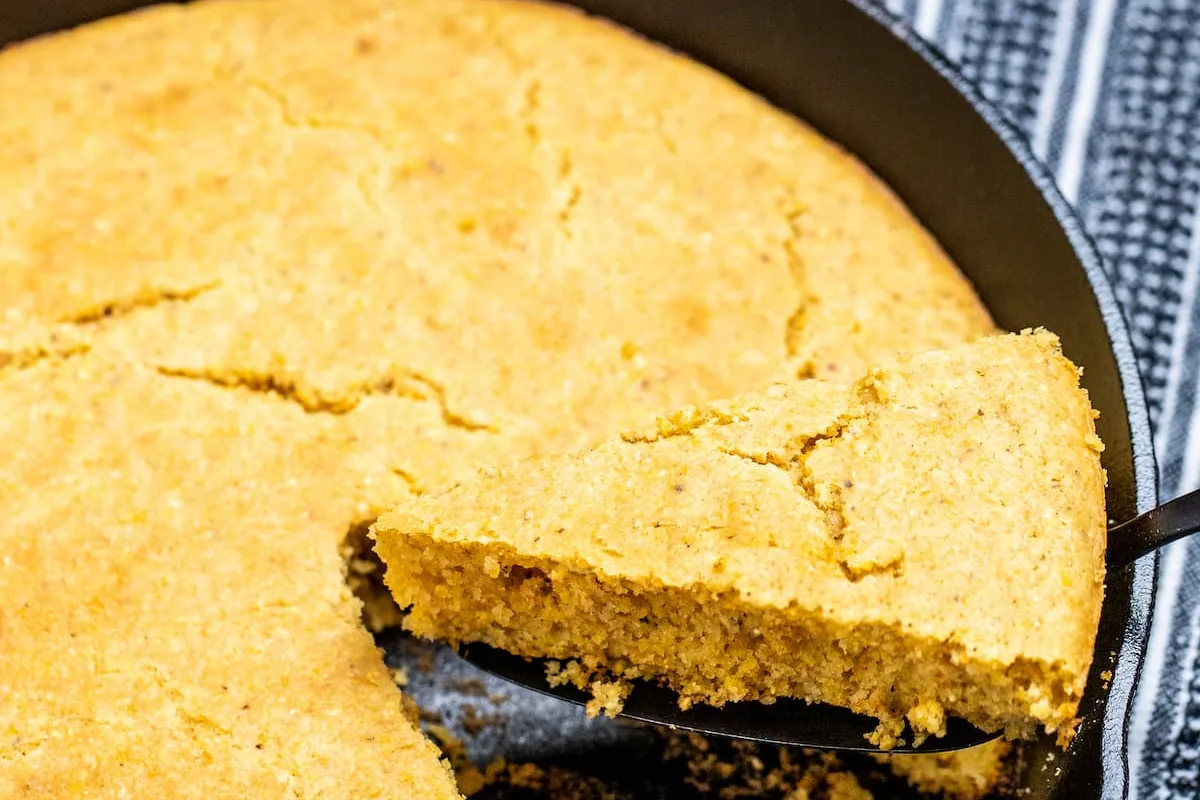
Why This Gluten Free Cornbread Recipe Works
If you have been hunting for a gluten free cornbread recipe that actually holds together, you know the struggle. Most gluten-free cornbread turns out dry, gritty, and crumbly - it looks beautiful in the pan and then falls apart the second you lift a slice. And the boxed mixes? They are usually wheat flour in disguise with a cornmeal garnish.
This recipe is different. It bakes up tall and golden with a moist, tender crumb that slices clean and stays in one piece right to the last square. The secret is a simple one: cornmeal gives the flavor, but a good gluten-free flour blend gives the structure, and buttermilk keeps everything soft. No gluey texture, no sand-in-your-mouth grit, no crumbling on the plate.
The other thing that sets this cornbread apart is the pan. The batter goes into a screaming-hot cast iron skillet slicked with melted butter, so every edge turns deep brown and faintly crispy while the middle stays light and fluffy. It is the same trick Southern cooks have used for generations - it just happens to work perfectly for gluten-free baking too.
Everything here is an everyday ingredient you can find at any grocery store, and the whole thing comes together in one bowl in about 10 minutes of hands-on work. Whether it is soaking up a bowl of chili, sitting next to Thanksgiving turkey, or slathered with butter and honey for breakfast, this is the cornbread recipe you will come back to.
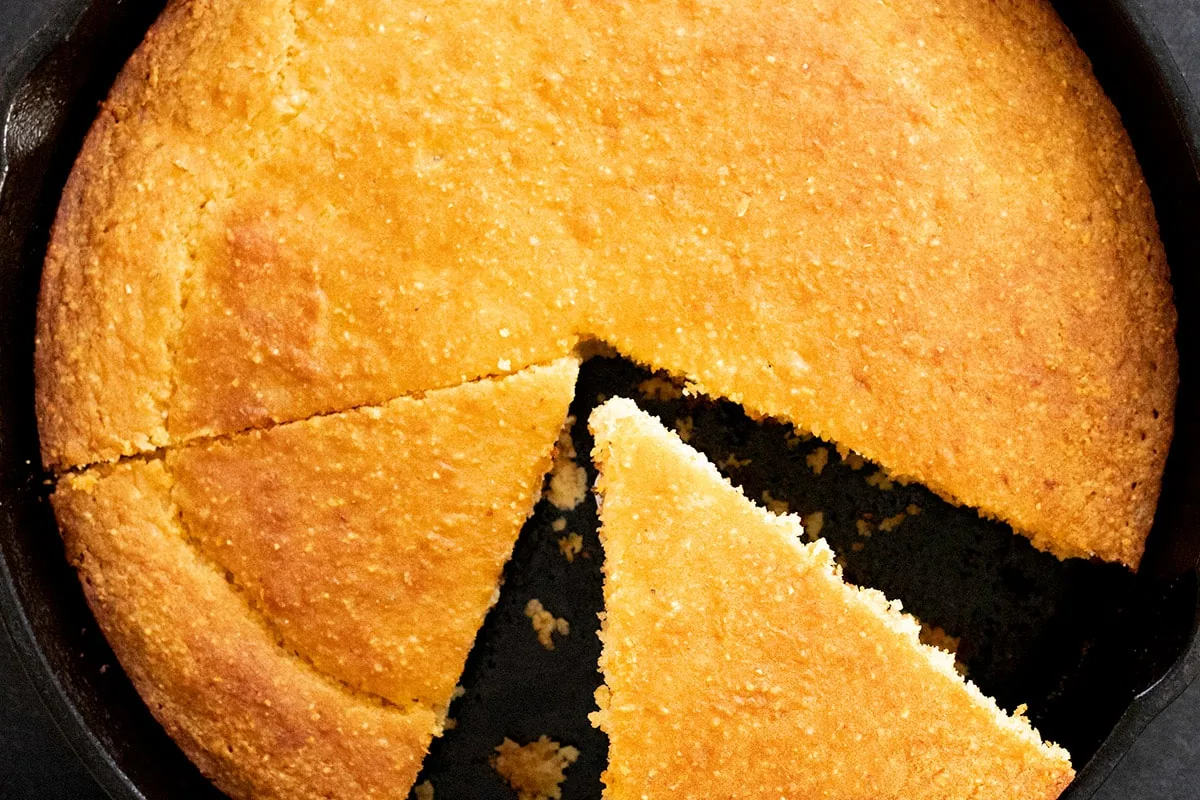
What You Need to Know Before You Start
First, the cornmeal. Buy certified gluten-free cornmeal - corn is naturally gluten-free, but cross-contamination at the mill is real, and celiac-safe eating means the label has to say it. Fine or medium grind is easiest; coarse stone-ground cornmeal gives more flavor but needs a soak (see the tips).
Second, the flour blend does the heavy lifting. Cornmeal alone has zero structure, which is why all-cornmeal gluten-free cornbread crumbles. A 1:1 all-purpose gluten-free blend with xanthan gum already in it gives the crumb something to hold on to, so your slices stay intact.
Third, keep the mixing gentle. The moment the wet and dry ingredients meet, stop stirring as soon as they are combined. Lumps are fine, overmixing is not - it makes the starches gummy and the bread tough. And give the pan its full 10-minute rest after baking; that short wait is what lets the cornbread set into clean, crumble-free slices.